I realize that my last post was pretty incoherent, and so I want to write a follow-up piece, one I hope will be shorter and actually have a thesis. In particular, I want to respond to some excellent criticisms that my mother has levied at me.
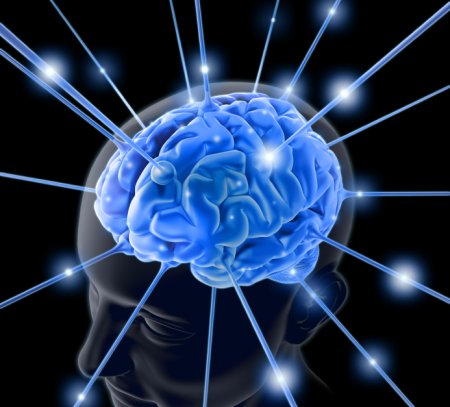 She pointed out, to begin with, that I didn’t even bother to define ‘identity’ and that’s true. I thought I had good reason not to, given that I was trying to explore intuition rather than give an exhaustive account, but perhaps I was wrong. So to begin with, I’d like to define identity as a composite of three major elements: the psychological and philosophical phenomenon that is a result of memory and consciousness, the sense of ‘I’ that traces out a path through time and space, that is consistent and coherent and develops in a continuous fashion (by the way, note the last sentence of the first paragraph of the Wiki article); the sociological position of existing at the intersection of various communities and societies which help us define ourselves and choose our paths in life; and then the intuitive notion of identity as a deeply significant emergent property which is inherent in us from birth, which comes about as a result of the other two.
 The argument I’m proposing is that we gain a better understanding of where our intuitions about identity come from and acknowledge the utility and disutility that come about as a result.
To the best of my knowledge, our psychological and philosophical conceptions of self and identity come mainly from consciousness, that state of being self-aware and having the capacity to recognize an autonomous self, and memory, the capacity to recognize this self as the same self that has existed at other times, in other forms and in other places. This psychological quirk of humans (and possibly other animals) is, one might argue, the defining characteristic of our species. Even if it’s not unique to humans, it is what makes possible the vast majority of what we do. Without a conception of being individuals, of being autonomous beings, I can’t say that I know what humanity would look like. Without a doubt, then, this inborn identificatory mechanism does a great deal of good. Of course, this has a lot of problems. Where, for example, does consciousness come from? Well, the brain, but to be honest, we don’t really understand it (though Dennett thinks he does), and it seems difficult to say what is and is not important. When does someone in a vegetative state cease to be a person? If you are copied and one copy is killed, is it murder? Of whom? More on this later.
 Then there’s the sociological conception of identity, in which we are defined by the communities to which we belong, whether we are born into them or we choose them. This could be religion, ethnicity, subcultural interests, place of birth or something else. These are also important to humans, to being human. They give us communities of people similar to us in a variety of ways, they make us feel happy, they give us a sense of belonging. There is no doubt that a humanity without partitioning into subsections based on a number of characteristics would either be a singular community, one that some feel is the future of humans, or a vast network of unconnected autonomous agents, which would probably be undesired by most people.
So far, everything seems fine. Identity is shown to exist by natural and social sciences alike, it makes us human, and it does a great deal of good. Well, sure, but it’s what we do with that information that begins to disturb me. I mentioned a third aspect of identity above and it’s that one I think I was discussing last time. The intense significance identity holds in our lives bothers and frustrates me when it appears that we are giving it far more power than it ought to have. So let’s problematize the issue.
Who are you?
Make a list, if you like, of all of the things you are. Maybe they’re nouns, maybe adjectives. Some of them will be capitalized. I’m sure you’ll object that there’s an immaterial general sensation of being yourself that is impossible to convey in a list, and that’s fine, write that down, too.
 Now, let’s play Armchair Philosophical Thought Experiment. If you turned out to be a brain in a vat, would you still be you? If there were a brain in a vat that had all of your memories but was physically distinct from your brain, would that be you? How would you feel about being cloned? Would someone with all of the characteristics on the list be you?
I hope what becomes clear is that what matters is the sense that you are you, not any ‘actual fact’ of being you, and that is really only in your brain. Which does not I repeat does not mean that you are not real, or that your identity isn’t real. As Dumbledore says, “Of course it is happening inside your head...but why on earth should that mean that it is not real?”. It just means that given the logical reasoning you’re able to accomplish, your identity is only based on you thinking you have one, having the ability to consider having one. And that means that your identity is a self-constructed object, pulled from selectively chosen and carefully framed memory, tempered and modified as contexts change. There’s certainly something real about your history, but what your mind chooses to recognize as itself is another thing entirely. Or else do you never feel like you do things that are ‘out of character.’ Are you you when you’re drunk, or high? When are you most quintessentially you, then?
More Thought Experiments. What kind of person are you? Are you kind, decent, nice to people? Above average in most ways? Intelligent, thoughtful, prone to changing your mind when you need to? Do you act in approximately similar ways at most times? Are you a special snowflake? Are you good at imagining what it is to be other people? Are you a tolerant, unprejudiced individual?
 Well, probably not, or at least not at all times. We think that we’re consistent, but we in fact behave in wildly different ways depending on our circumstances. We hate changing our minds, rationalizing to infinity to avoid it, especially when it challenges any deeply or emotionally strongly held identity. We care about being kind to people in our in-groups more than people in our out-groups. And none of this makes a bit of difference when you’re asked to describe yourself to others. Want more evidence? You’ve probably heard of the study in which people are given psychological profiles, which they rank as highly accurate, not knowing that they all got the same one. We’re all pretty similar, even though we don’t like to admit it, and furthermore, in the ways in which we are different, we just imagine what we would do in any given situation and work based on that. All of these things we consider ourselves to be, all of these traits we pride ourselves on, they don’t appear to be all that true. And you’re probably a racist.
 Finally, what do the groups you count yourself a part of say about you? Does being Jewish really say anything substantive about you? What does it even mean to be a woman, or a man, or neither? There are countless words that we use to refer to concepts that seem to be simply indescribable; they simply are, and we associate powerful identities with these things we can’t explain. But given the vast diversity within the people who identify in a certain way (do Democrats all agree? What about neo-Platonists?), what are we really saying? Or are we muddling through, hoping people understand that intangibles we’re trying to get across?
Some answers:
Clearly, we have much more to learn about psychological identity, but it does seem that our intuition does alright by us, that generally our bodies circumscribe our identities, that our brains are the locus of self and that we are the same people as we move through time. So that’s not so bad. We’ve never really had to deal with aliens, Star Trek or teleportation, and so perhaps it doesn’t matter. But it should really be acknowledged that we don’t have good answers to these questions, and so maybe we shouldn’t put so much stock into the answers we have.
 As for how we think of ourselves in terms of positive characteristics, there are very good reasons for favorable self-conceptions. It’s how we stop ourselves from being depressed, it’s how we have the psychological immune system that keeps us happy most of the time, no matter what happens. And yet, if we ignore the facts about the ways we think and the ways we treat and think about other people, we’ll never be able to improve ourselves. If we think we’re excellent, rational thinkers, how will we overcome our biases? If we think we’re consistent and need to be, how will we change our minds when we need to? If we think we are the same around different types of people, how will we learn to act appropriately in different situations, or learn not to judge others for doing the same? And if we think that none of us are racists or sexists anymore, then we won’t respond well to being called out on it, and feminism will stay middle-class and white and no one will think objectification is a problem.
Also, while communities and identity labels are important and feel good and give us a sense of belonging, we can’t be giving up anything just to belong to an incoherent cluster concept. Most identities really are empirical dense spots in concept-space, but there’s plenty of variance in there, and while identifying yourself publicly can make an excellent political statement, there’s no reason to subscribe to the whole list just because you already fulfill a lot of it. If you’re a woman you don’t need to dress a certain way, look a certain way, have sex with men. If you’re a Jew you don’t need to believe in Biblical inerrancy just because you believe in god, or be halachically observant just because your mother was Jewish. These get pretty complicated, of course, but the point is that there’s no need to appropriate a whole set of characteristics for yourself just because they happen to be highly correlated over a population.
In the final analysis, identity is an emergent property, and the thing about emergent properties is that they vanish when you dig in a little. They are real, they are important, but they are not unquestionably fundamental aspects of our lives, unless we make them so. For all of the benefits they give us, there are drawbacks, and we should question these identities whenever they unduly affect us.

To the best of my knowledge, our psychological and philosophical conceptions of self and identity come mainly from consciousness, that state of being self-aware and having the capacity to recognize an autonomous self, and memory, the capacity to recognize this self as the same self that has existed at other times, in other forms and in other places. This psychological quirk of humans (and possibly other animals) is, one might argue, the defining characteristic of our species. Even if it’s not unique to humans, it is what makes possible the vast majority of what we do. Without a conception of being individuals, of being autonomous beings, I can’t say that I know what humanity would look like. Without a doubt, then, this inborn identificatory mechanism does a great deal of good. Of course, this has a lot of problems. Where, for example, does consciousness come from? Well, the brain, but to be honest, we don’t really understand it (though Dennett thinks he does), and it seems difficult to say what is and is not important. When does someone in a vegetative state cease to be a person? If you are copied and one copy is killed, is it murder? Of whom? More on this later.
So far, everything seems fine. Identity is shown to exist by natural and social sciences alike, it makes us human, and it does a great deal of good. Well, sure, but it’s what we do with that information that begins to disturb me. I mentioned a third aspect of identity above and it’s that one I think I was discussing last time. The intense significance identity holds in our lives bothers and frustrates me when it appears that we are giving it far more power than it ought to have. So let’s problematize the issue.
Who are you?
Make a list, if you like, of all of the things you are. Maybe they’re nouns, maybe adjectives. Some of them will be capitalized. I’m sure you’ll object that there’s an immaterial general sensation of being yourself that is impossible to convey in a list, and that’s fine, write that down, too.
I hope what becomes clear is that what matters is the sense that you are you, not any ‘actual fact’ of being you, and that is really only in your brain. Which does not I repeat does not mean that you are not real, or that your identity isn’t real. As Dumbledore says, “Of course it is happening inside your head...but why on earth should that mean that it is not real?”. It just means that given the logical reasoning you’re able to accomplish, your identity is only based on you thinking you have one, having the ability to consider having one. And that means that your identity is a self-constructed object, pulled from selectively chosen and carefully framed memory, tempered and modified as contexts change. There’s certainly something real about your history, but what your mind chooses to recognize as itself is another thing entirely. Or else do you never feel like you do things that are ‘out of character.’ Are you you when you’re drunk, or high? When are you most quintessentially you, then?
More Thought Experiments. What kind of person are you? Are you kind, decent, nice to people? Above average in most ways? Intelligent, thoughtful, prone to changing your mind when you need to? Do you act in approximately similar ways at most times? Are you a special snowflake? Are you good at imagining what it is to be other people? Are you a tolerant, unprejudiced individual?

Some answers:
Clearly, we have much more to learn about psychological identity, but it does seem that our intuition does alright by us, that generally our bodies circumscribe our identities, that our brains are the locus of self and that we are the same people as we move through time. So that’s not so bad. We’ve never really had to deal with aliens, Star Trek or teleportation, and so perhaps it doesn’t matter. But it should really be acknowledged that we don’t have good answers to these questions, and so maybe we shouldn’t put so much stock into the answers we have.
Also, while communities and identity labels are important and feel good and give us a sense of belonging, we can’t be giving up anything just to belong to an incoherent cluster concept. Most identities really are empirical dense spots in concept-space, but there’s plenty of variance in there, and while identifying yourself publicly can make an excellent political statement, there’s no reason to subscribe to the whole list just because you already fulfill a lot of it. If you’re a woman you don’t need to dress a certain way, look a certain way, have sex with men. If you’re a Jew you don’t need to believe in Biblical inerrancy just because you believe in god, or be halachically observant just because your mother was Jewish. These get pretty complicated, of course, but the point is that there’s no need to appropriate a whole set of characteristics for yourself just because they happen to be highly correlated over a population.
In the final analysis, identity is an emergent property, and the thing about emergent properties is that they vanish when you dig in a little. They are real, they are important, but they are not unquestionably fundamental aspects of our lives, unless we make them so. For all of the benefits they give us, there are drawbacks, and we should question these identities whenever they unduly affect us.


